
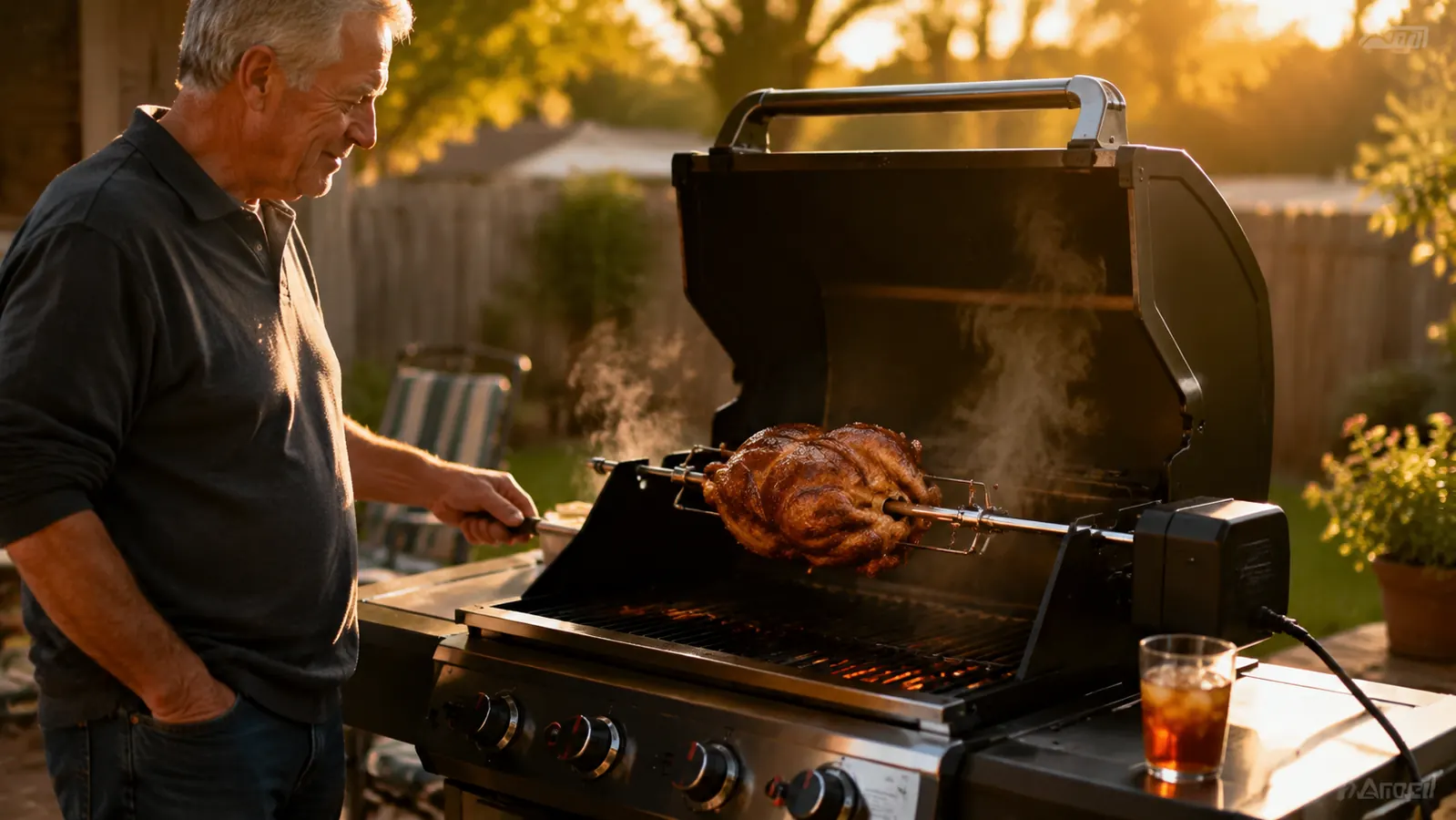
I bought the Dyna-Glo Universal Rotisserie Kit back in January after my buddy Hank wouldn't shut up about the one he ran on his own grill over the holidays. I'm 65, semi-retired, and I've got a 3-burner gas grill and a charcoal kettle sitting side by side on my patio, and until this kit showed up in a box on my porch, I'd never once cooked anything on a spit in my life. Six months and roughly two dozen cooks later, I've got a real answer for whether it's worth bolting onto your grill, and it's not a simple yes or no.
This isn't a first-impressions post written after one lucky Sunday. My wife Bonnie and I have eaten a rotisserie chicken almost every Sunday since late January, our son Travis has borrowed the kit twice for his own grill down the road, and I ran a 14-pound turkey through it in April as a dry run before Thanksgiving planning even started. I've got opinions now, backed up by a stack of dirty drip pans, and not all of those opinions are flattering to the Dyna-Glo name.
The Quick Verdict
A sturdy, well-built motor and spit system that turns your existing gas grill into a genuine rotisserie setup, though the counterweight and forks take some patience to dial in and the motor housing shows some wear after heavy use.
Amazon Check Today's Price →Tired of dry chicken breast and soggy skin every single Sunday?
The Dyna-Glo kit fixes the actual problem, uneven heat and pooling fat, by keeping the bird turning and self-basting the whole cook. Here's the current listing so you can check availability and today's price.
Amazon Check Today's Price on Amazon →How I've Used It
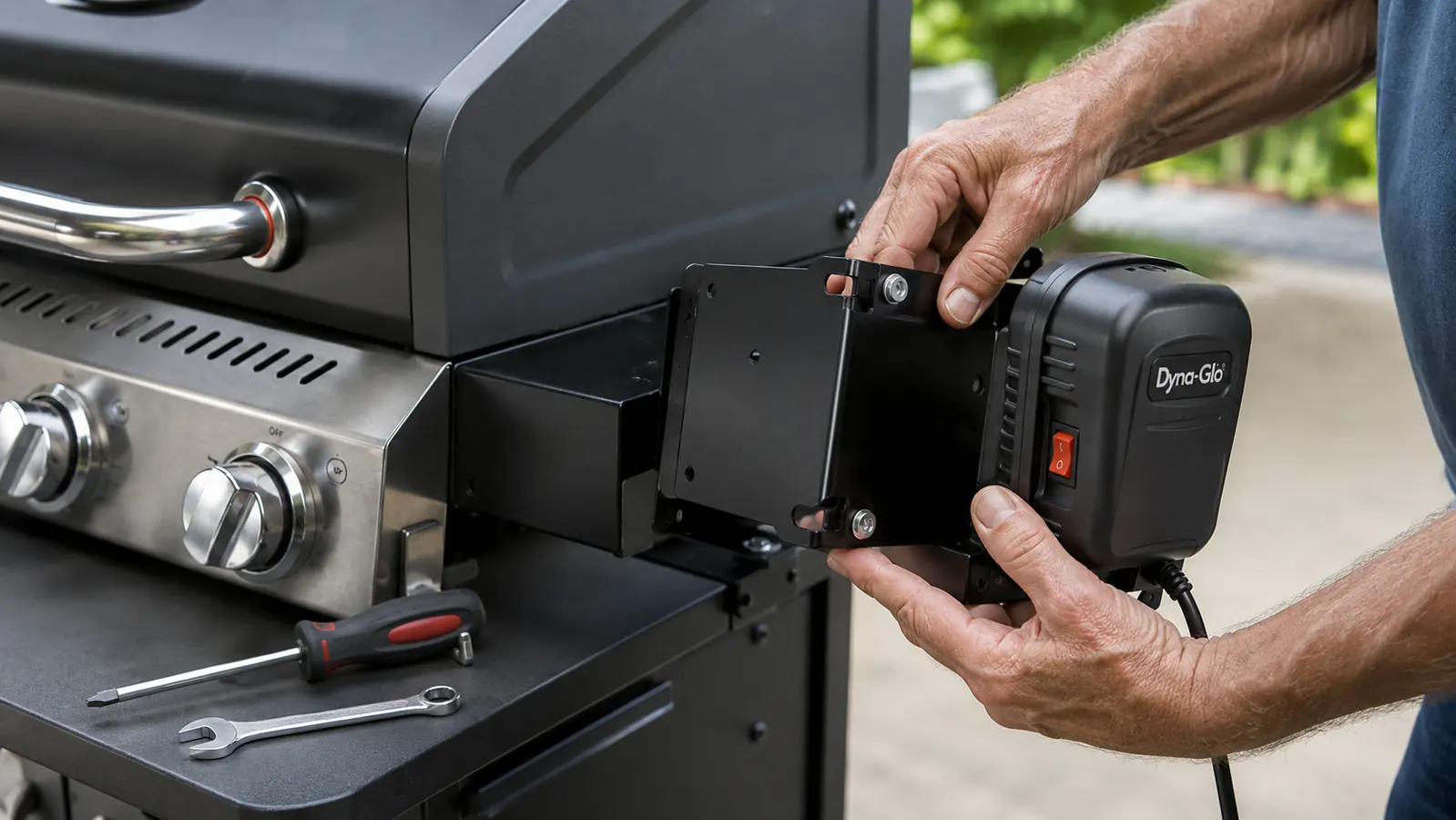
My grill is a standard 3-burner Weber-style setup with a spot on the right side burner box meant for a rotisserie motor, and the Dyna-Glo kit's mounting bracket lined up close enough that I only had to drill two new holes to get it snug. The spit rod itself is a solid square-cross-section bar, not the flimsy round rod some cheaper kits use, and the two sets of forks bite into the meat with real teeth instead of the dull prongs I'd read about on other brands before I bought this one.
The first few cooks were a learning curve, not because the kit failed me but because I didn't know how to balance a bird on a spit. My first chicken, a 5-pound bird from the grocery store, wobbled so badly the motor strained and made a grinding noise for the first ten minutes until I repositioned it closer to true center. Once I figured out the counterweight adjustment, every cook since has been smooth and quiet, which surprised me given how rough that first attempt sounded.
By week three I had a system down cold: truss the bird tight with kitchen twine, run the spit rod through the cavity, lock both forks down hard against the bone, and slide the counterweight until the whole assembly spins freely with one light push before the motor engages. That routine now takes me about four minutes from start to finish, including wiping down the counter after.
Travis borrowed the kit in March for a cookout at his place and called me afterward mildly annoyed that it worked better on his grill than it did on mine the first time around, since his burner box happened to line up with the bracket without any drilling at all. I told him that's the price of being the guinea pig. He's since asked me twice if he can just buy his own instead of borrowing mine every time, which I take as a decent endorsement.
The Motor and Build Quality After Heavy Use
The motor is rated to handle up to about 30 pounds of meat, which covers everything from a chicken to a small turkey. I've run it on chickens between 4 and 6 pounds almost every week, plus that one 14-pound turkey in April, and the motor has never stalled or bogged down on me. It runs at a steady, slow rotation, roughly one turn every 8 to 10 seconds, which is about the speed you want for even basting without splashing fat everywhere.
Where I've noticed wear is in the motor housing itself. After about four months of weekly use, sitting outside on the grill even under a cover during rain, the plastic housing developed a slight yellowing on the sun-facing side and one of the two mounting screws started to strip. I replaced that screw with a slightly larger stainless one from my garage bin and haven't had an issue since, but it's worth knowing this isn't a part built for indefinite outdoor storage without some care from the owner.
The spit rod, forks, and counterweight are all stainless steel and have held up without a spot of rust, even after Bonnie ran the dishwasher-unsafe forks through the actual dishwasher twice before I caught her and switched us back to hand washing. That was my mistake for not labeling them clearly, not the product's fault, but it's a detail worth flagging for anyone else in a two-cook household.
I also took the whole assembly apart in May just to check for hidden corrosion on the threads where the forks screw onto the spit rod, since that's usually the weak point on cheaper kits I've read about. Everything came apart clean, no seized threads, no pitting. That gave me more confidence in the metal quality than the housing plastic ever did.
What a Typical Cook Actually Looks Like
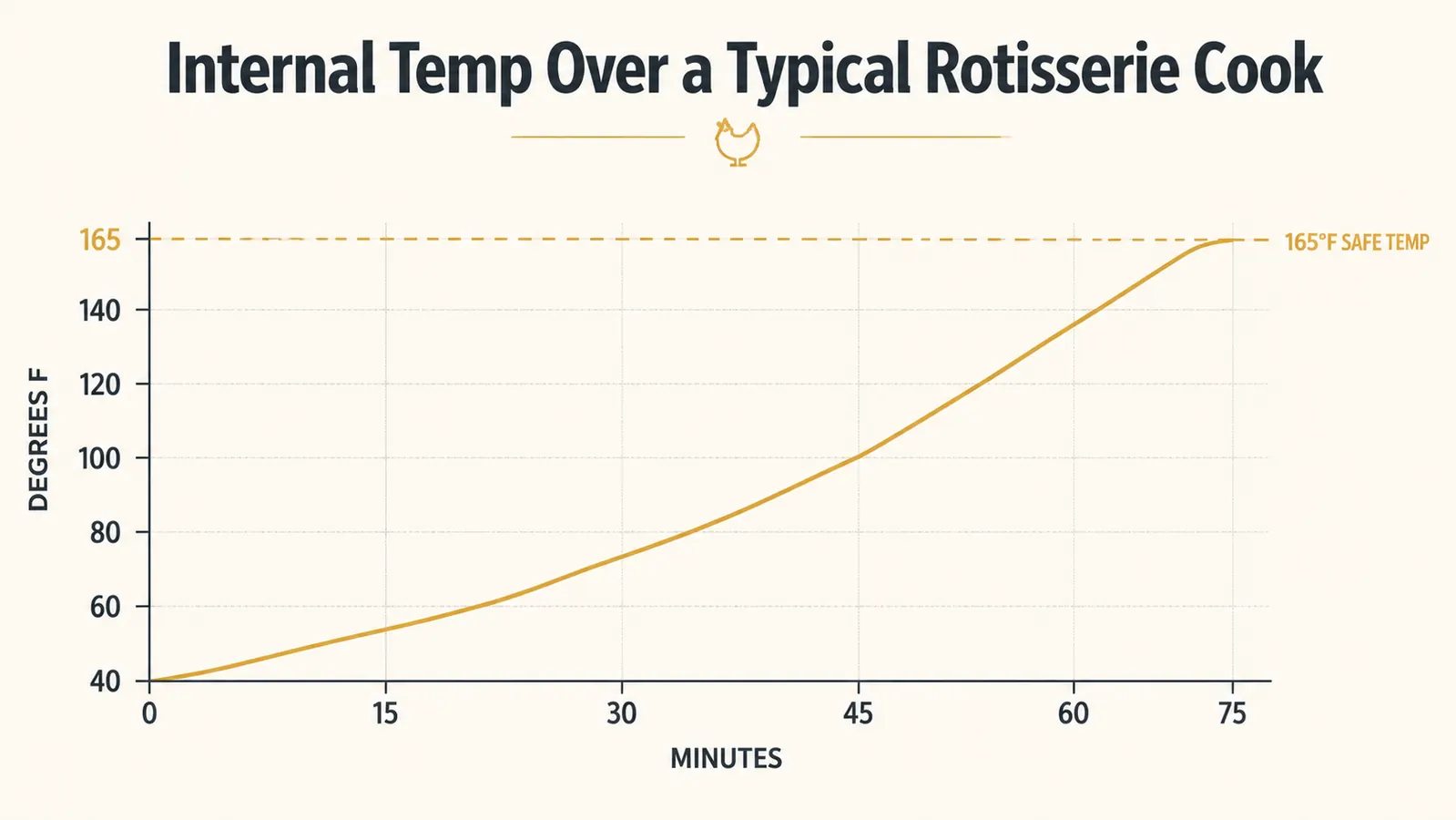
A 5-pound chicken takes me about 75 to 90 minutes at a steady 350 to 375 degrees using the two outer burners on my grill with the middle burner off, drip pan centered underneath to catch the rendered fat. The skin comes out uniformly crisp on all sides, which was the whole reason I bought this thing in the first place. On a regular grill grate, I always ended up with one side crackly and one side pale and rubbery no matter how often I flipped it during the cook.
The self-basting effect is real and it's the single biggest difference from grate cooking. As the bird rotates, rendered fat runs down and coats the whole exterior evenly instead of pooling on whatever side happens to be facing down at the moment. My grandkids Mia and Owen, ages 8 and 6, have started calling Sunday chicken 'the spinny chicken' and ask for it by name when they come over, which tells you something about how the skin turns out compared to what we used to serve them.
For the turkey trial in April, I had to remove my grill's warming rack to get clearance, and even then the bird's legs came within about half an inch of the lid at full rotation. It worked, but a turkey over about 15 pounds would be tight on my specific grill model, so I'd measure your own lid clearance before you plan a big holiday bird around this kit rather than finding out the hard way on Thanksgiving morning.
I've also run a pork loin and a small standing rib roast through it, both secured on the forks without any spit rod trouble since they don't need trussing the way a whole bird does. The pork loin in particular came out better than anything I've made on the grate, evenly rendered fat cap and no dried-out ends, which has quietly become my favorite thing to cook on this rig even more than chicken.
What I Considered Before Buying This One
I looked at two other options before landing on the Dyna-Glo kit. One was a cheaper universal kit around half the price with a round spit rod and a motor rated for less weight, which several reviews mentioned stalling on anything over 10 pounds, a dealbreaker given I already had turkey ambitions in the back of my mind. The other was a stainless kit built specifically for one grill brand that wasn't compatible with my setup without a separate adapter kit, which would have added to the total cost anyway once I priced it out.
I picked the Dyna-Glo mainly because the universal bracket fit my existing burner box with minor drilling, the motor weight rating covered everything from chicken to a modest turkey, and the reviews I read from other 3-burner gas grill owners specifically matched my setup instead of being vague about compatibility the way a lot of listings are.
Where This Kit Falls Short
The instructions that come in the box are thin. There's a diagram, but it assumes you already know rotisserie basics like where to position the counterweight and how tight the forks need to bite into the meat. I ended up watching two YouTube videos before my first cook to understand the balancing process, and I wish Dyna-Glo had included even a single page walking through that instead of leaving new owners to figure it out through trial and error like I did.
The counterweight also requires re-balancing for every different size and shape of meat, which means you can't just leave everything locked in place between cooks and expect a smooth spin next time. It's maybe two extra minutes of setup, but if you're expecting a truly set-and-forget experience where you mount it once and never think about it again, this isn't quite that.
And as I mentioned, the motor housing shows cosmetic wear faster than I expected given it's marketed for outdoor grill use. It still functions perfectly at six months, but I've started bringing it inside between uses instead of leaving it mounted on the grill year-round, which is an extra step I didn't plan on and one more thing to remember before I fire up the grill each Sunday.
What We Liked
- Solid square spit rod and toothed forks that actually grip meat
- Motor handles everything from a 4-pound chicken to a 14-pound turkey without stalling
- Universal bracket fit my 3-burner grill with minimal drilling
- Self-basting effect produces genuinely even, crisp skin every time
- Quiet, steady rotation once properly balanced
- Threads and forks showed no corrosion after disassembly at the 4-month mark
Where It Falls Short
- Thin instructions, especially for first-time rotisserie users
- Counterweight needs re-adjusting for every different cut of meat
- Motor housing shows cosmetic wear after months of outdoor exposure
- Forks and spit rod are not dishwasher safe despite being stainless
My grandkids call it 'the spinny chicken' now, and honestly, that's the best review this kit is ever going to get.

Who This Is For
If you've got a gas grill with a burner box on one side and you're tired of dry breast meat or soggy skin from grate cooking, this kit solves that specific problem. It's also a smart buy if you cook whole birds regularly, chicken, small turkeys, even a boneless roast on the forks, since the motor is rated for enough weight to cover most home cooking needs without upgrading to a dedicated rotisserie oven. Anyone willing to spend an extra few minutes balancing the spit before each cook will get real value out of it week after week.
Who Should Skip It
If your grill doesn't have a bracket mount point or you're not comfortable drilling two small holes into your burner box, this becomes a more complicated purchase than it needs to be. And if you mostly grill burgers, steaks, and quick weeknight meals rather than whole roasts, a rotisserie motor is going to sit unused most of the year gathering dust in the garage. This is a tool for people who already love the idea of a whole roasted bird on a Sunday, not a general-purpose grilling upgrade for everyday cooking.
Six months of Sunday chickens later, I'd buy it again.
If your grill has a mounting spot on the burner box, this kit turns it into a real rotisserie setup without a huge investment. Check the current listing for today's price and availability.
Amazon Check Today's Price on Amazon →