
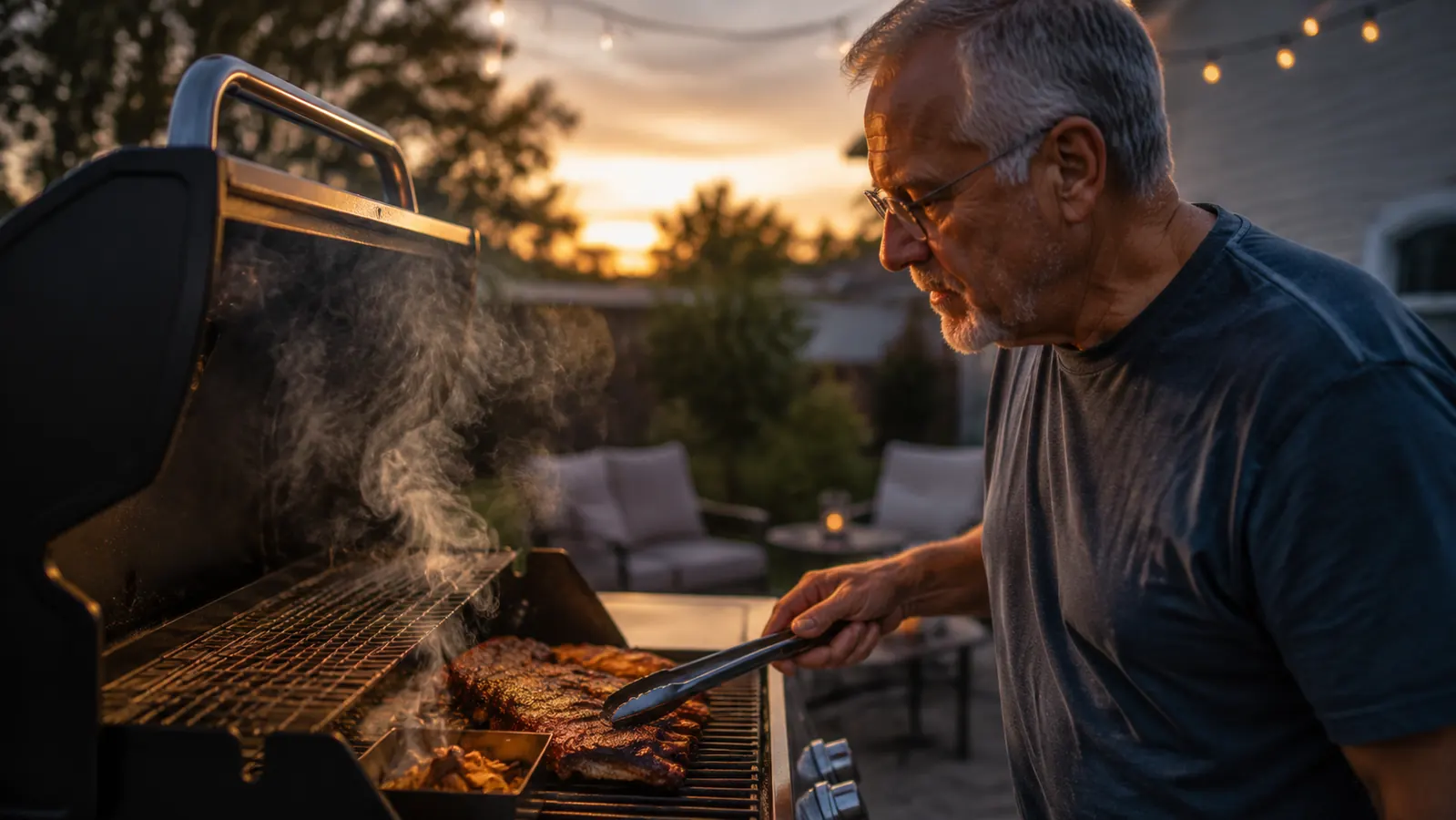
I picked up my first bag of Weber Hickory Wood Chunks last spring after my buddy Hank talked me out of the wood chips I'd been using for years. I'm 65, semi-retired, and I run both a 3-burner gas grill and a charcoal kettle, and Hank's argument was simple: chips burn up in twenty minutes and chunks actually last through a real cook. I was skeptical, mostly because I'd been perfectly happy tossing a handful of soaked chips onto the coals for a decade, but I bought a bag anyway. That was the start of a full season, six bags, and something close to thirty smoke sessions later, and I've got a real answer on whether these chunks are worth keeping in the garage year round.
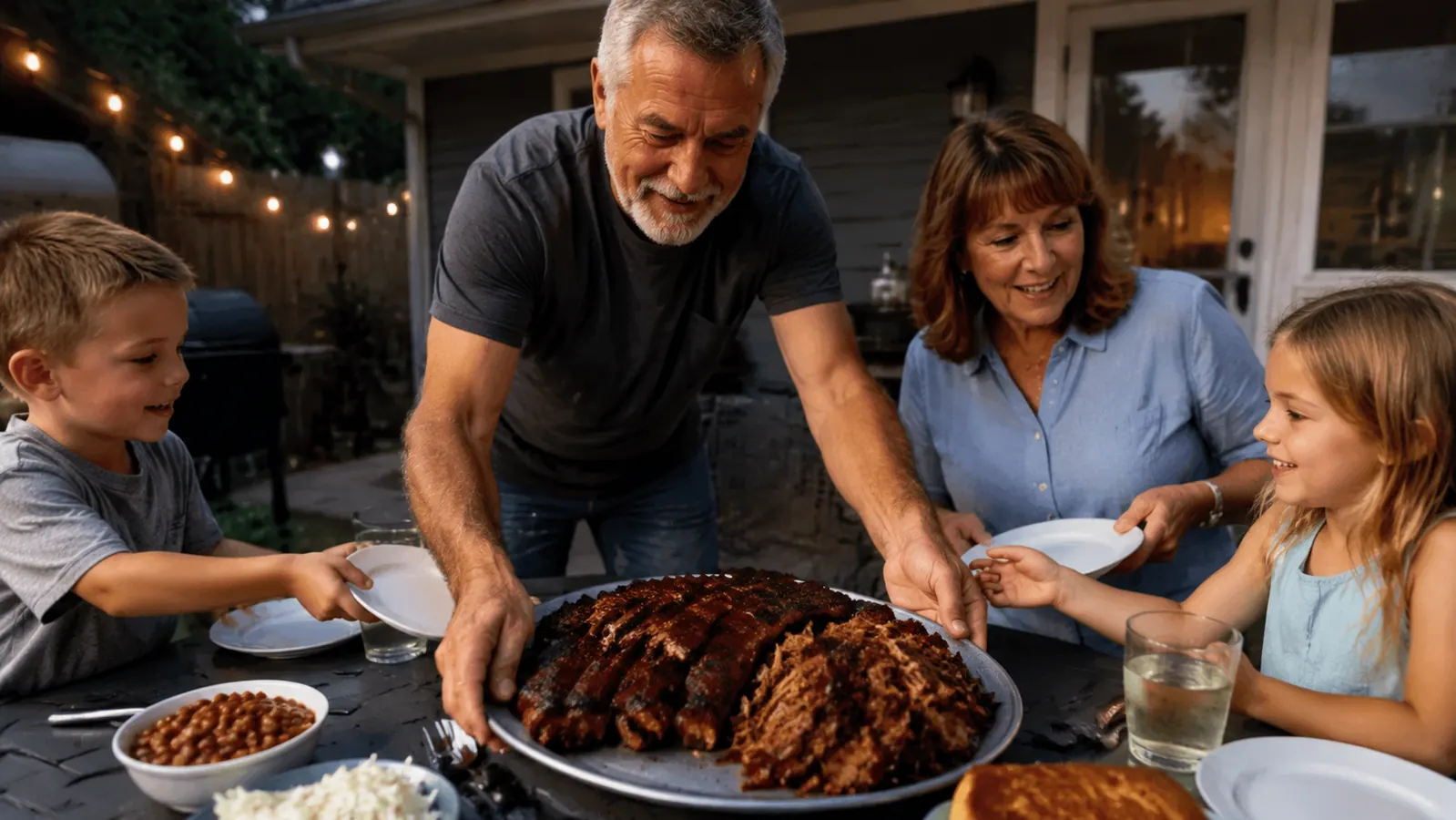
This isn't a one-cook impression written the weekend the bag arrived. I ran these chunks through ribs, a pork butt, a brisket, chicken thighs, and even a batch of smoked cheese in the cooler months when the grill can still handle low, gentle heat. Bonnie has opinions about which cook came out best, Travis has borrowed a bag twice for his own backyard, and my grandkids Mia and Owen now ask for "the smoky ribs" by name. That's the short version. The long version covers burn time, chunk size consistency, how far a 4-pound bag actually stretches, and how the hickory flavor performed across different cuts of meat.
The Quick Verdict
Solid, dense hickory chunks that burn slow and steady for two to three hours each, deliver real hickory bite without turning bitter, and stretch a long way across a season, with the only real gripe being some size inconsistency bag to bag.
Amazon Check Today's Price →Tired of wood chips that burn out before the meat's even close to done?
These hickory chunks solve the actual problem, chips flaring up and disappearing in twenty minutes, by burning slow and dense for hours at a time. Here's the current listing so you can check availability and today's price.
Amazon Check Today's Price on Amazon →How I've Used It
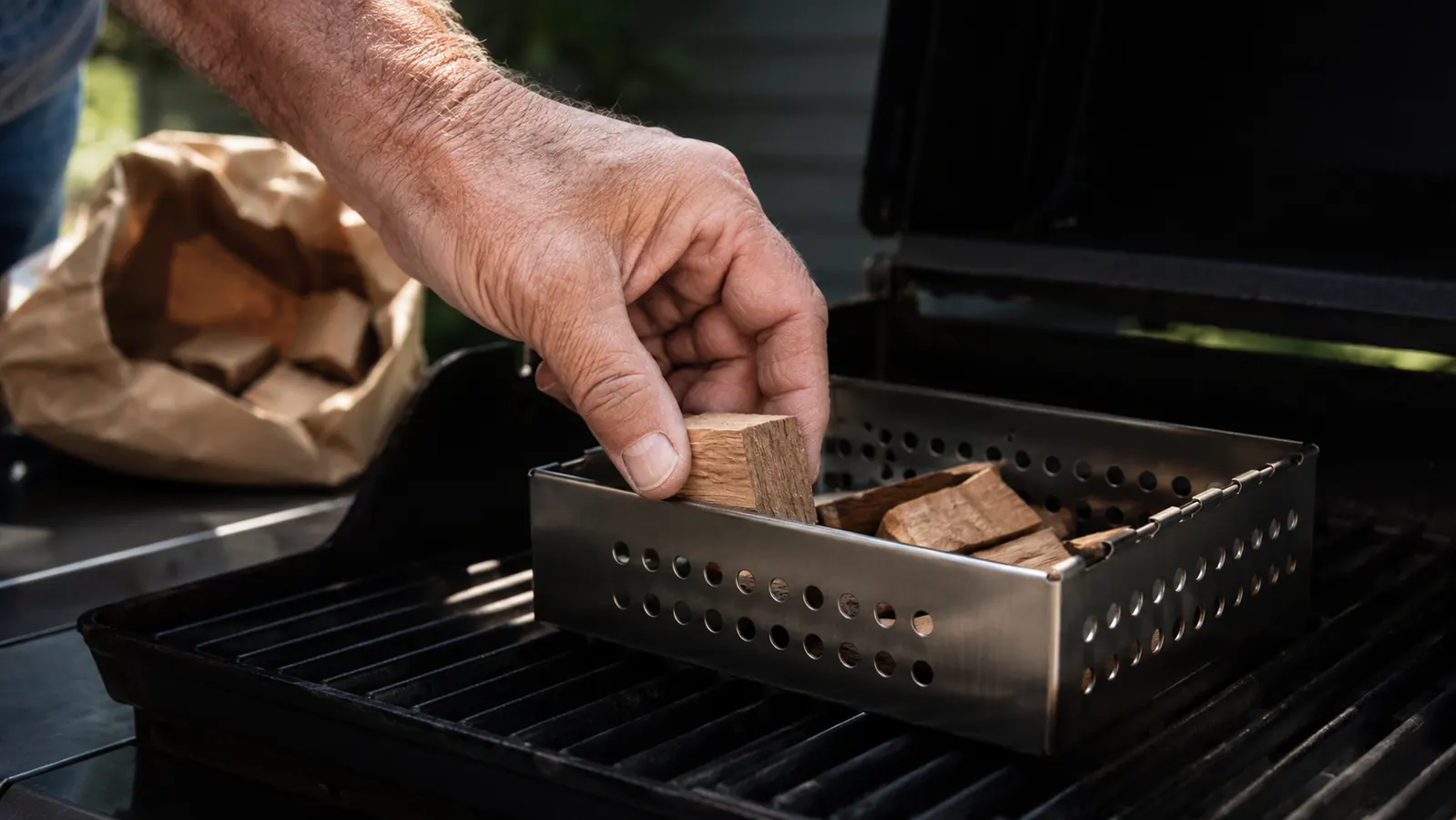
Most of my cooks happen on the gas grill, where I run a small perforated smoker box on top of the grate over one burner, loaded with one or two chunks depending on how long the cook is going to run. On the charcoal kettle, I bury the chunks straight into a bed of unlit coals using the snake method, which lets them catch one at a time as the fire creeps around the ring instead of all smoking at once. Both setups have worked, but they behave differently, and it took me a couple of tries to dial in each one.
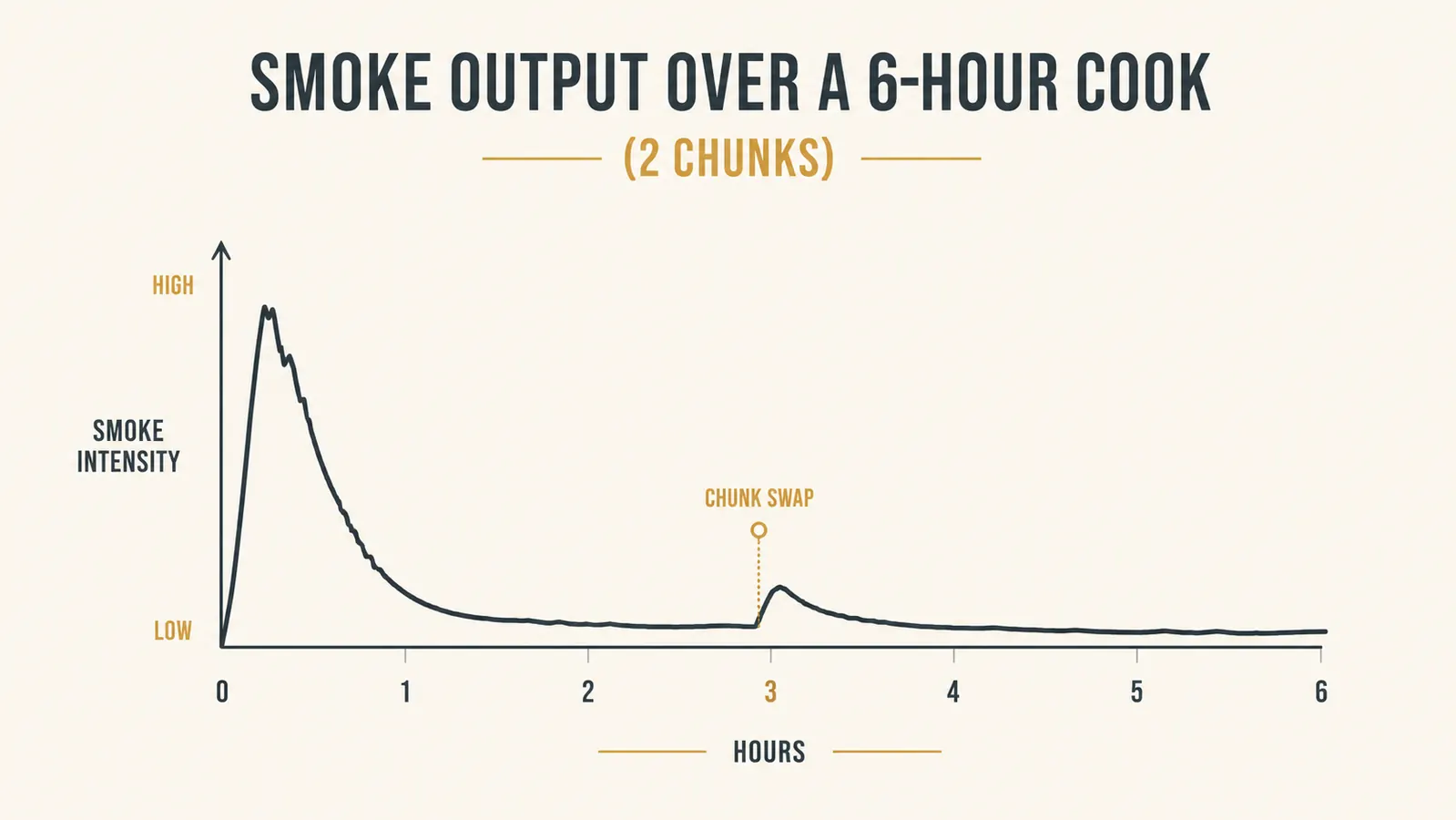
The first time I used these on the gas grill, I made the same mistake I used to make with chips: I tossed in three chunks at once thinking more would mean more flavor. Instead I got a gray, acrid cloud for the first forty minutes that left the chicken thighs tasting almost sooty. Cutting back to a single chunk, sometimes swapping in a second one partway through a longer cook, fixed that completely. One chunk on the gas grill gives me a thin, steady blue smoke for close to two hours before it burns down to ash, which is exactly the kind of smoke you actually want clinging to the meat.
By midsummer I had a rhythm: one chunk for anything under two hours like chicken thighs or a rack of ribs, two chunks staggered thirty minutes apart for a longer pork butt cook, and up to three total swapped in over the course of a full brisket day. Travis borrowed a bag in the fall for his own cookout and came back saying he'd oversmoked his first attempt, same mistake I made, too many chunks too early. I told him that's basically a rite of passage with hickory.
Burn Time and Smolder Behavior: What Actually Happens Once It's Lit
Burn time is the thing I cared about most going in, because chips had been burning out on me constantly and I was tired of babysitting the grill every fifteen minutes to add more. These Weber chunks are genuinely dense, heavier in the hand than I expected the first time I picked one up, and that density is exactly why they smolder instead of flare. On the gas grill in a smoker box, a single chunk consistently gives me somewhere between an hour and forty-five minutes and two and a half hours of usable smoke before it's reduced to ash, depending on how hot I'm running the burner underneath it.
On the charcoal kettle using the snake method, burn behavior changes because the chunks aren't sitting in direct box heat, they're catching fire naturally as the charcoal ring burns toward them. That gives a longer, gentler release, closer to two and a half to three hours per chunk in my experience, which is why I lean on the kettle for anything running past the four-hour mark like a pork butt or brisket. The tradeoff is less control over exactly when each chunk ignites, so I've had a couple of cooks where the smoke came in stronger than planned because two chunks caught closer together than I'd laid them out.
What surprised me most across the season is how little these chunks flare compared to chips. I've had exactly one flare-up all year, and that was because I'd let a chunk sit directly over an open gas flame instead of over the smoker box, which is on me, not the wood. Kept over indirect heat or buried in unlit charcoal the way they're meant to be used, these chunks smolder instead of catching flame, which is really the whole selling point of buying chunks over chips in the first place.
Chunk Size Consistency: Bag to Bag, What I Actually Found
This is the one area where I've got a genuine complaint after six bags. The Weber chunks inside are supposed to be roughly fist-sized, and most of them are, somewhere in the range of a closed fist to slightly larger, which is the right size for a smoker box or for burying in a charcoal ring. But every bag I've opened has had at least a few chunks that were noticeably smaller, closer to a golf ball, mixed in with the bigger pieces, and one bag last August had almost a third of its contents on the smaller end.
That inconsistency matters more than it sounds like it should, because a smaller chunk burns through in under an hour, while a bigger one can run past two and a half. If you're loading a smoker box without paying attention to size, you can end up with an uneven burn where half your chunks are ash before the ones on the other side have even fully caught. My workaround has been simple: I sort the bag by size when I open it, saving the smaller pieces for shorter cooks like chicken thighs and reserving the big ones for anything running four hours or more. It's a five-minute step, but it would be nice not to need it.
None of the chunks I've gotten have been outright bad, no rot, no bark chunks with almost no usable wood, nothing like that. It's purely a size-range issue, and once I started sorting on arrival, it stopped being a problem I even thought about mid-cook.
Bag Quantity and Value: How Far a 4-Pound Bag Actually Stretches
A 4-pound bag has lasted me anywhere from four to six cooks depending on how many chunks each session used. On the low end, a quick weeknight cook with a single chunk barely dents the bag. On the high end, a full-day brisket with three chunks staggered in eats through a noticeable chunk of the bag in one go. Averaged across the season, I got right around five cooks per bag, which worked out to me buying a fresh bag roughly once every three to four weeks during peak grilling months, and closer to once every couple months once the weather cooled and I was cooking less often.
Compared to what I used to spend on chip refills, this has actually been a better deal, since a bag of chips would disappear in two or three cooks at most given how fast they burn. I keep an unopened backup bag in the garage at all times now, mostly because running out mid-season and discovering the store's shelf is empty happened to me once in July, right before a planned cookout, and I never want to repeat that scramble again.
Hickory Flavor on Different Meats: Where It Shines and Where It's Too Much
Weber's hickory has a reputation for being a strong, almost bacon-like smoke flavor, and after a season of testing it across different cuts, that reputation is earned, for better and worse depending on what's on the grill. Pork is where this wood absolutely shines. My pork butt and ribs both came out with a deep, savory smoke ring and a flavor that Bonnie says reminds her of the barbecue place we used to drive forty minutes to visit before it closed. Two chunks over a long pork butt cook gave a flavor that was strong but never bitter, which is the balance I was worried about going in.
Brisket handled hickory well too, though I found one chunk was plenty for the first two hours of the cook, with the rest of the smoke flavor coming from the fat rendering rather than needing continuous fresh wood smoke the whole way through. Where I'd actually caution people is chicken. Chicken thighs and legs picked up hickory smoke fast, and a single chunk left in too long, past about ninety minutes, started tasting more like the outside of a smoked sausage than actual chicken. I've settled on pulling the chunk out or letting the fire die down well before the chicken is done if I want the flavor to stay in the background rather than take over.
I tried the smoked cheese experiment on a cool October afternoon using cold-smoke technique, just a single small chunk smoldering with no direct heat under the cheese, and hickory turned out to be a bit heavy-handed there too. A milder wood would probably suit cheese better, but for anything meaty and hearty, ribs, pork butt, brisket, hickory has been the right call for my taste every time.
What We Liked
- Dense chunks smolder slow and steady, one to two and a half hours of usable smoke per chunk depending on setup
- Barely any flare-up risk when used correctly over indirect heat or buried in unlit charcoal
- Strong, authentic hickory flavor that reads as real barbecue on pork and brisket
- A 4-pound bag stretched to roughly five cooks for me across a full season
- Works equally well on a gas grill smoker box and a charcoal kettle using the snake method
- No rot or unusable bark chunks across six bags, just a size-range issue
Where It Falls Short
- Chunk size varies noticeably bag to bag, some pieces run fist-sized, others closer to a golf ball
- Strong flavor can overwhelm lighter meats like chicken if left smoking too long
- Requires sorting by hand if you want consistent burn times across a cook
- Not ideal for delicate applications like cold-smoked cheese without diluting with a milder wood
One chunk, buried right, gives you two hours of the kind of thin blue smoke that actually makes barbecue taste like barbecue, not a campfire.
Who This Is For
If you've been going through bag after bag of wood chips because they burn out in twenty minutes and you're tired of babysitting the fire, these chunks solve that problem directly. They're also the right call if you're smoking pork or beef regularly, since hickory's strong, savory flavor is genuinely suited to fattier, heartier cuts, and if you don't mind spending five minutes sorting a bag by size when it arrives so your burn times stay predictable. Anyone running a gas grill with a smoker box or a charcoal kettle with the snake method is going to get real, repeatable results from these across a whole season the way I have.
Who Should Skip It
If you mostly grill chicken or fish and want a lighter, more forgiving smoke flavor, hickory's strength can work against you unless you're careful about timing, and a milder wood chunk might suit your regular cooks better. And if bag-to-bag size consistency is a dealbreaker for you, meaning you want every chunk to burn for a predictable, identical amount of time without any sorting on your end, that inconsistency is a real annoyance worth knowing about going in. This is a wood for people who are actually smoking pork and beef on a regular basis, not an occasional novelty bag for one cookout.
A full smoking season later, these are still the chunks I reach for.
If you're ready to trade twenty-minute wood chips for real, hours-long smoke, these hickory chunks are the piece of the setup that actually makes the difference. Check the current listing for today's price and availability.
Amazon Check Today's Price on Amazon →