
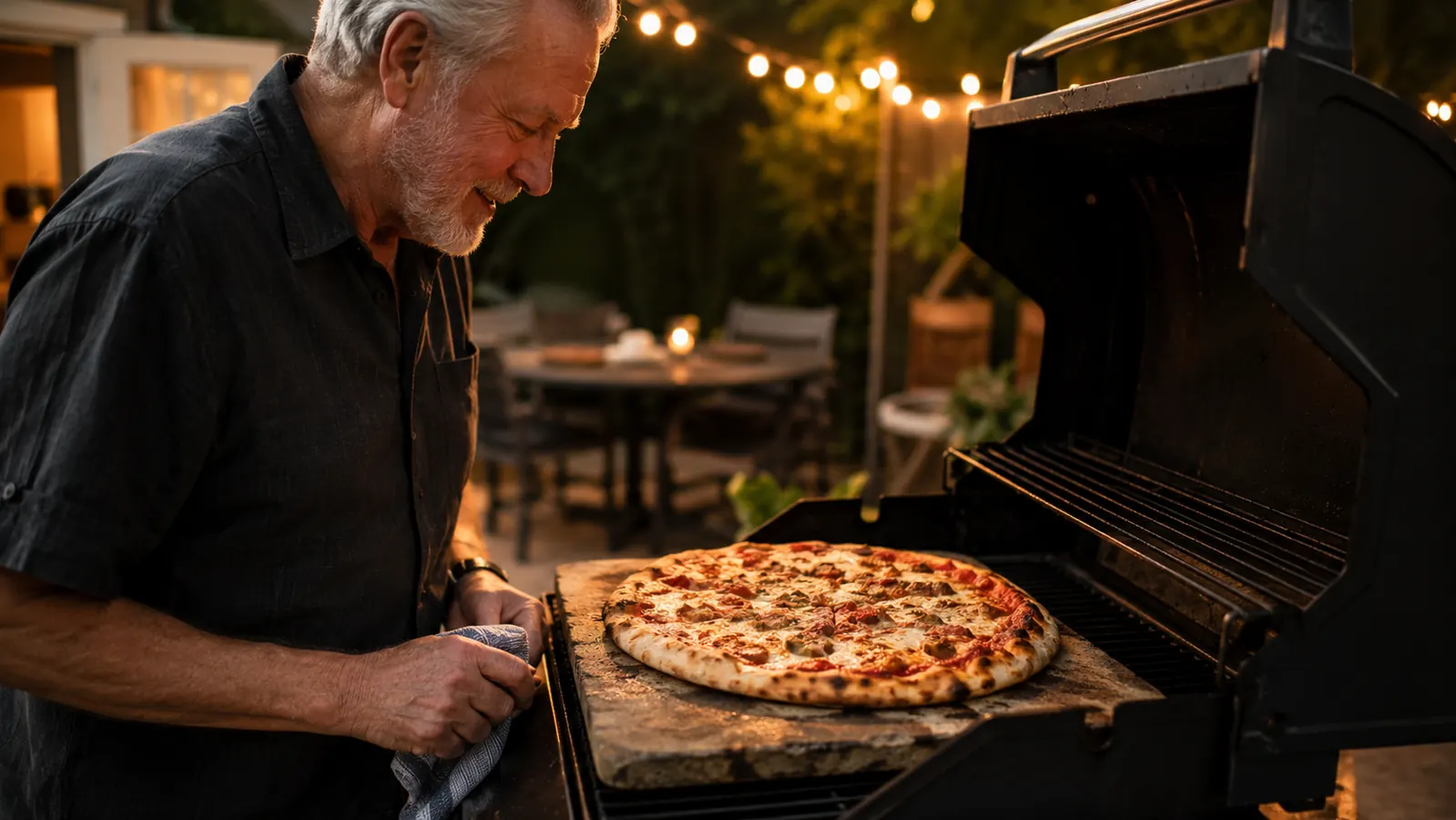
For about two years I told anyone who'd listen that my grill just wasn't built for pizza. Every pie came out the same way: charred on the bottom, pale and doughy in the middle, and gummy right where the sauce pooled. My wife Bonnie finally called it what it was, a bad tool problem, not a bad grill problem. So I picked up a Hans Grill Pizza Stone PRO XL, the rectangular cordierite one, and set it on my three-burner gas grill for a Friday night pizza with our grandkids Mia and Owen. That first pie had a crust I actually had to bite into instead of just chew through.
That was over a year ago now. We've done Friday pizza night more times than I can count since, and I've had time to figure out exactly why that stone made the difference. Here are the ten reasons a real pizza stone changes your crust for good, not just once, but every single time you fire it up.
Stop guessing and get the crust right the first time.
The stone does the work your grill grates never could. Here's the one I've used every Friday for a year.
Amazon Check Today's Price on Amazon →It spreads heat evenly instead of leaving hot spots
Grill grates run hotter directly over the burners and cooler between them, which is exactly why my old cookie-sheet pizzas came out striped, dark in some spots and raw in others. A stone acts as a buffer. It absorbs the uneven heat off the grates and re-radiates it upward evenly, so the whole bottom of the crust browns at roughly the same rate instead of scorching in three spots and staying pale in the rest.
It pulls moisture out of the dough instead of trapping it
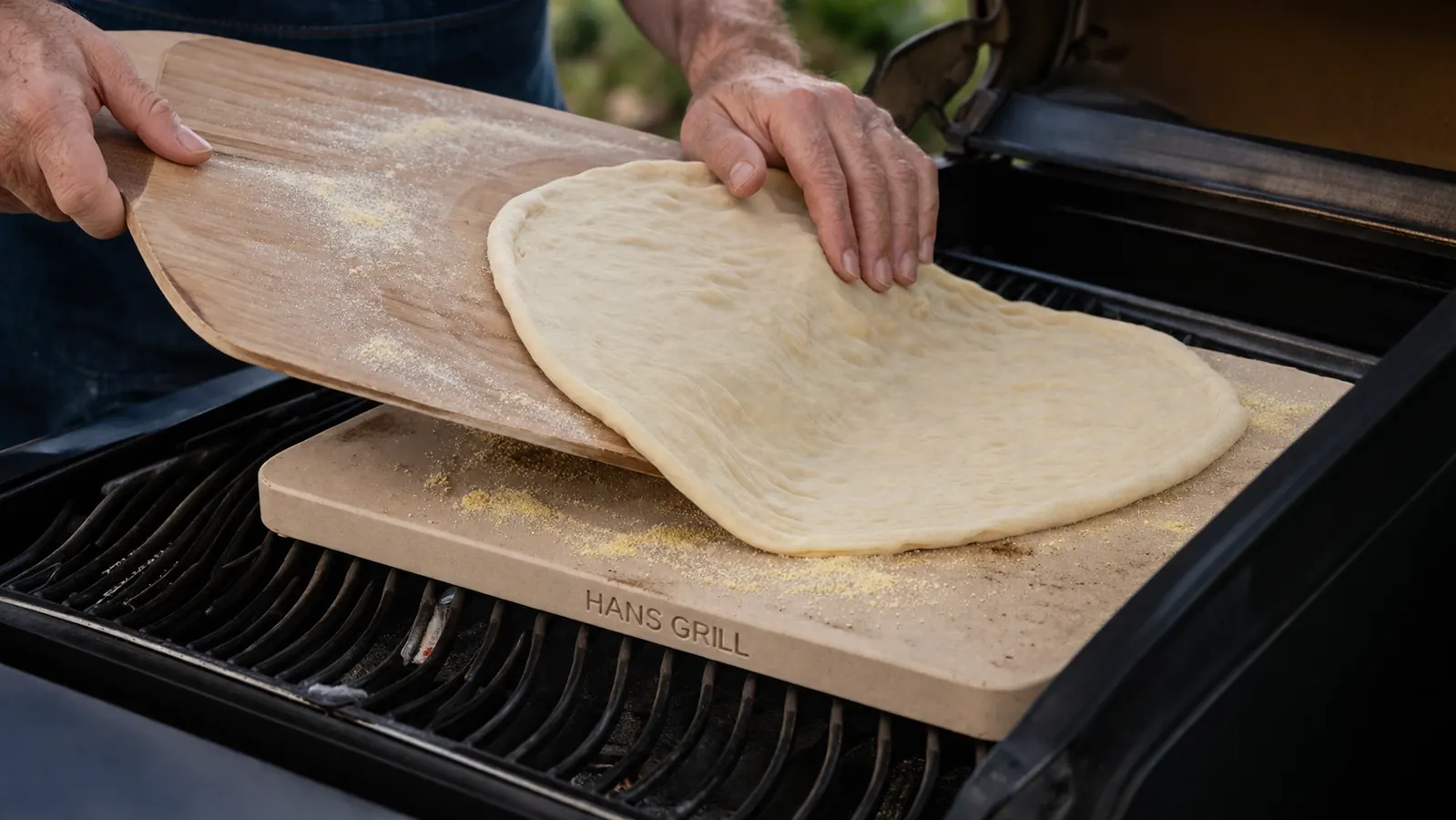
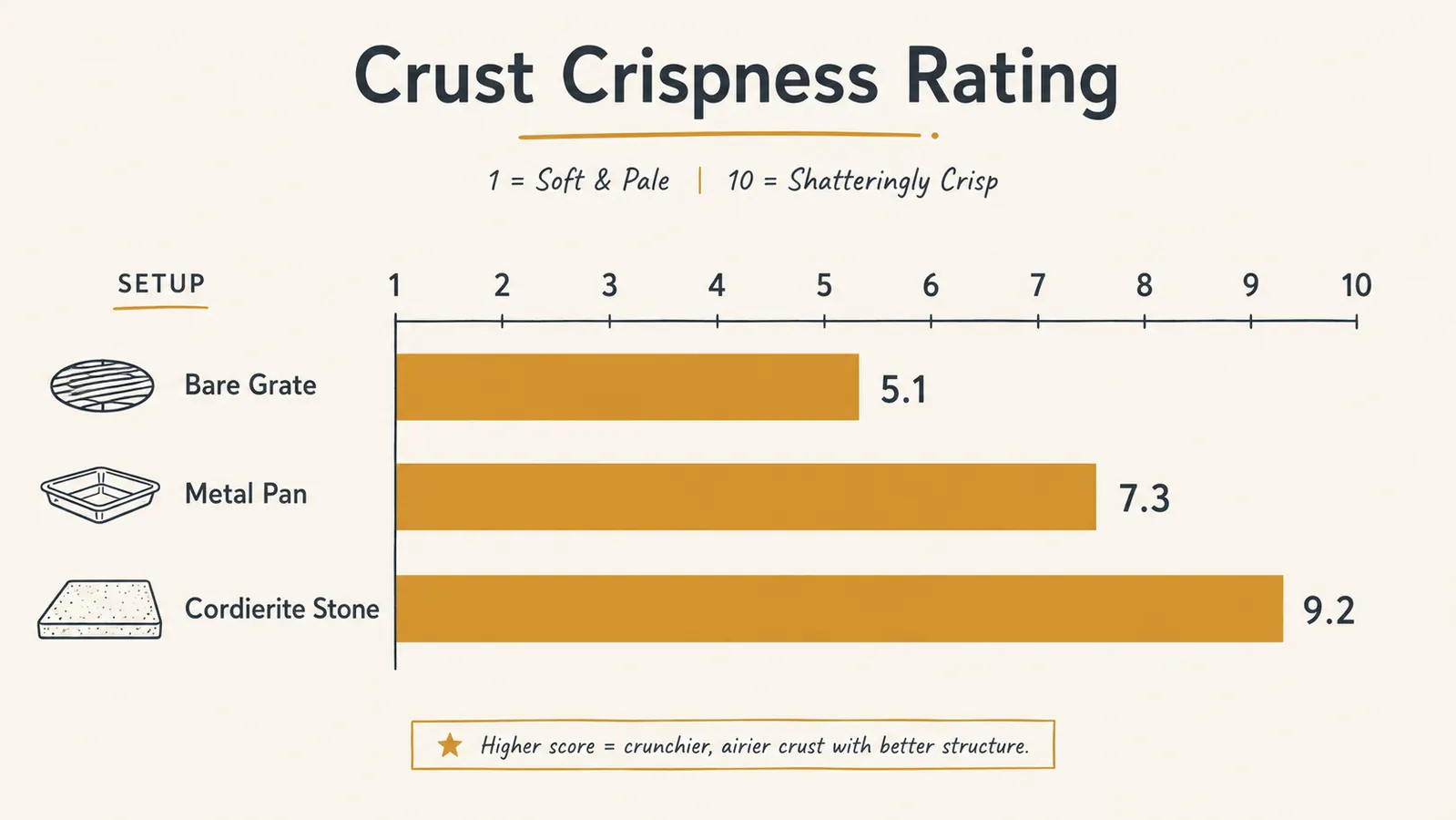
Cordierite is porous. That sounds like a small detail until you taste the difference. On a metal pan, steam from the dough has nowhere to go, so it sits underneath and turns the bottom soft. The Hans Grill stone wicks that moisture away as the dough cooks, which is the actual reason grill pizza can taste like it came from a real pizzeria oven instead of a reheated frozen pie.
It holds its heat through the whole bake, not just at the start
A thin metal pan loses heat the second you set cold dough on it. A thick cordierite stone has real thermal mass, it stores heat and keeps releasing it steadily for the full 6 to 9 minutes a pie needs. I preheat mine for a solid 20 minutes with the lid down before the first pizza ever goes on, and by the third pie of the night it's still cooking as fast as the first.
It's thick enough to handle direct grill heat without cracking
I was nervous the first time, honestly. Grill heat swings around a lot more than a home oven, and I'd heard stories of thinner stones splitting from thermal shock. A year in, mine hasn't so much as hairlined. The PRO XL is built thicker than the bargain stones I tried before it, and that extra mass is what keeps it from cracking when the grill temperature jumps around on a windy evening.
Amazon See the thickness that's survived a year of grill heat → →
The XL size actually feeds a family
My first stone was a small round one and it fit exactly one personal pizza. With Mia and Owen both wanting their own toppings, that meant three separate bakes and a lot of standing around the grill. The rectangular PRO XL is big enough that I can fit one full-size pie or split it for two smaller ones side by side, which cut our pizza night prep time almost in half.
Amazon See the size that stopped the pizza assembly line → →
It gets you closer to a real pizza oven floor
Every good pizzeria crust comes from direct contact with a hot stone or brick surface, not a metal pan suspended in hot air. Setting a cordierite stone on the grates is the closest thing most of us will ever get to that stone-floor oven in our own backyard, and it shows up immediately in how the bottom crust blisters and browns instead of just baking flat.
Amazon See the stone that mimics a real pizza oven floor → →
It works on the grill in summer and the oven the rest of the year
Come October when it's too cold to stand at the grill, I move the same stone straight into the kitchen oven. Same crust, same result, no separate indoor stone needed. That versatility is a bigger deal than it sounds, because it means the stone earns its keep twelve months a year instead of sitting in the garage from Labor Day to Memorial Day.

The rectangular shape actually fits gas grates better than round stones
My first stone was round, and round stones waste a lot of usable grate space on a rectangular grill, plus they're harder to center evenly over three burners. The rectangular shape of the Hans Grill stone lines up with my grill's cook surface instead of fighting it, which also makes it easier to slide pizzas on and off without bumping the grill's side walls.
It gets better with every use, not worse
Cast iron gets talked about for seasoning over time, but a cordierite pizza stone does something similar. Mine has a darker, slightly stained look now after a year of use, and if anything the crust results have gotten more consistent, not less, because I've learned exactly how long to preheat it and where to set it on my particular grill.
Cleanup takes two minutes, not twenty
No soap goes anywhere near mine. I let it cool completely, scrape off any stuck flour or cheese with a metal spatula, and wipe it down with a dry cloth. That's it. Compared to scrubbing a warped, sauce-stained metal pan in the sink, this is the part of pizza night nobody talks about but everybody appreciates by 9 p.m. on a Friday.
What I'd Skip
I'd skip the thin, bargain-bin round stones sold at the hardware store checkout counter. I went through two of them before landing on the PRO XL, and both cracked within a few months of regular grill use. I'd also skip skipping the preheat step, no matter how hungry the grandkids are. A stone that goes on cold with the dough already loaded on it just steams the bottom instead of crisping it, and you lose the entire reason for owning one in the first place.
The grill was never the problem. I was asking a metal pan to do a stone's job, and it just couldn't.
One Friday pizza night is all it takes to see the difference.
This is the exact stone that's been on my grill every week for over a year, and it still goes strong.
Amazon Check Today's Price on Amazon →