
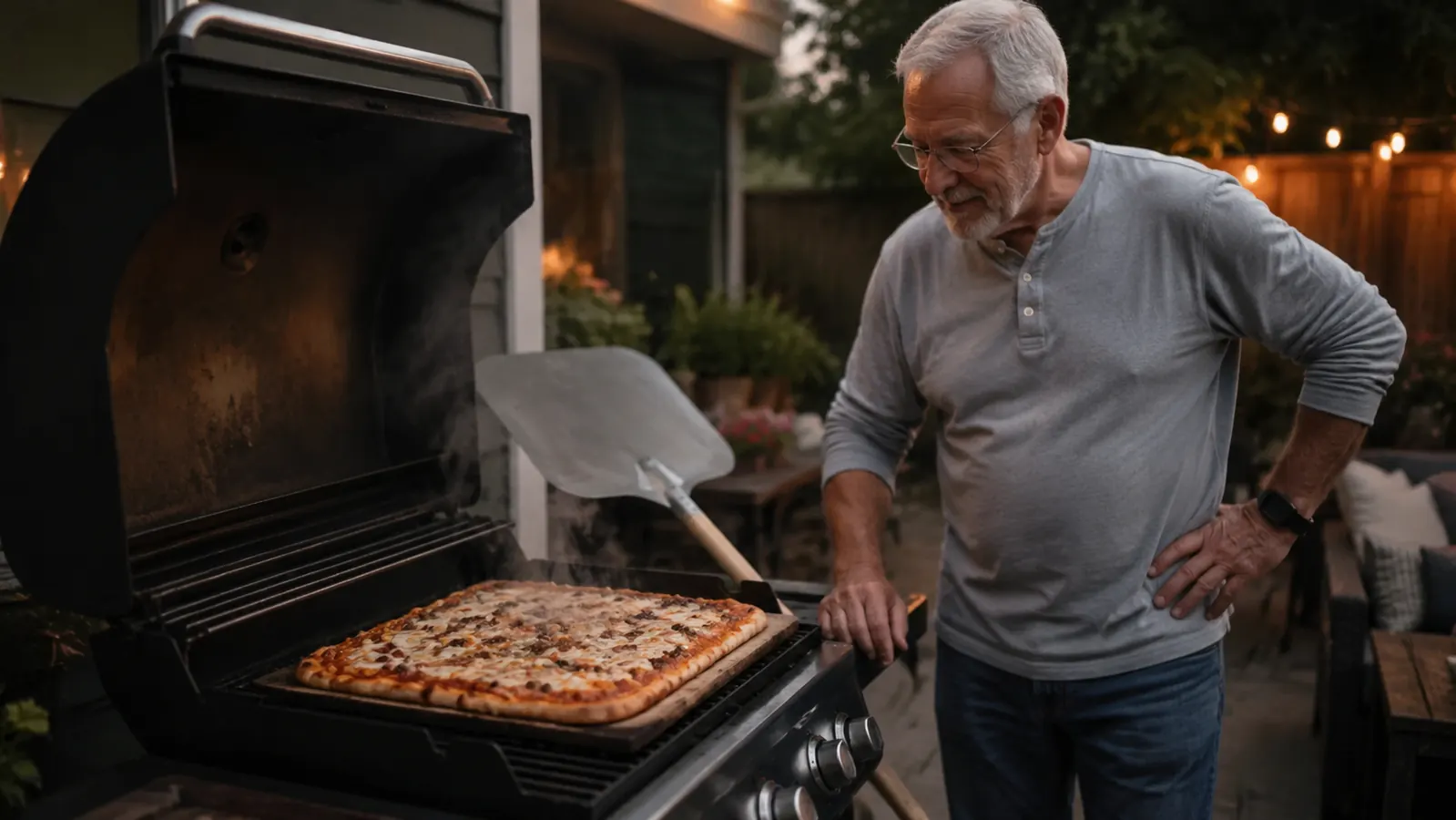
I bought the Hans Grill Pizza Stone PRO XL last July after Bonnie got tired of me buying frozen pizzas and calling it a Friday night meal. My buddy Hank had been running a cordierite stone on his grill for years and kept telling me his crust came out better than anything from the delivery place two towns over. I'm 65, semi-retired, and between my 3-burner gas grill and my charcoal kettle, I figured I had enough grill real estate to give it a real shot. A full year and somewhere north of forty pizzas later, I've got a genuine answer on whether this stone earns a permanent spot in my grill cabinet, and it mostly does, with a few things I wish I'd known on day one.
This isn't a review written after one lucky pie on a warm evening. Fridays became pizza night at our house starting last summer, and that habit carried straight through fall, a cold snap in January where I still fired up the grill in a coat, and into this year's spring and early summer. Travis has borrowed the stone twice for cookouts at his own place, my grandkids Mia and Owen have their own topping requests memorized, and I've cracked exactly one stone in my life, and it wasn't this one. That's the short version. The long version covers thermal shock, staining, and what a cordierite slab actually looks like after 12 months of real use.
The Quick Verdict
A thick, honest cordierite stone that shrugs off a year of high grill heat without cracking, produces a genuinely crisp bottom crust, and stains like a well-used cast iron pan rather than falling apart.
Amazon Check Today's Price →Tired of soggy centers and a burnt bottom every time you try grill pizza?
The Hans Grill PRO XL fixes the actual problem, uneven direct heat under thin dough, by soaking up steady heat and holding it evenly across the whole surface. Here's the current listing so you can check availability and today's price.
Amazon Check Today's Price on Amazon →How I've Used It
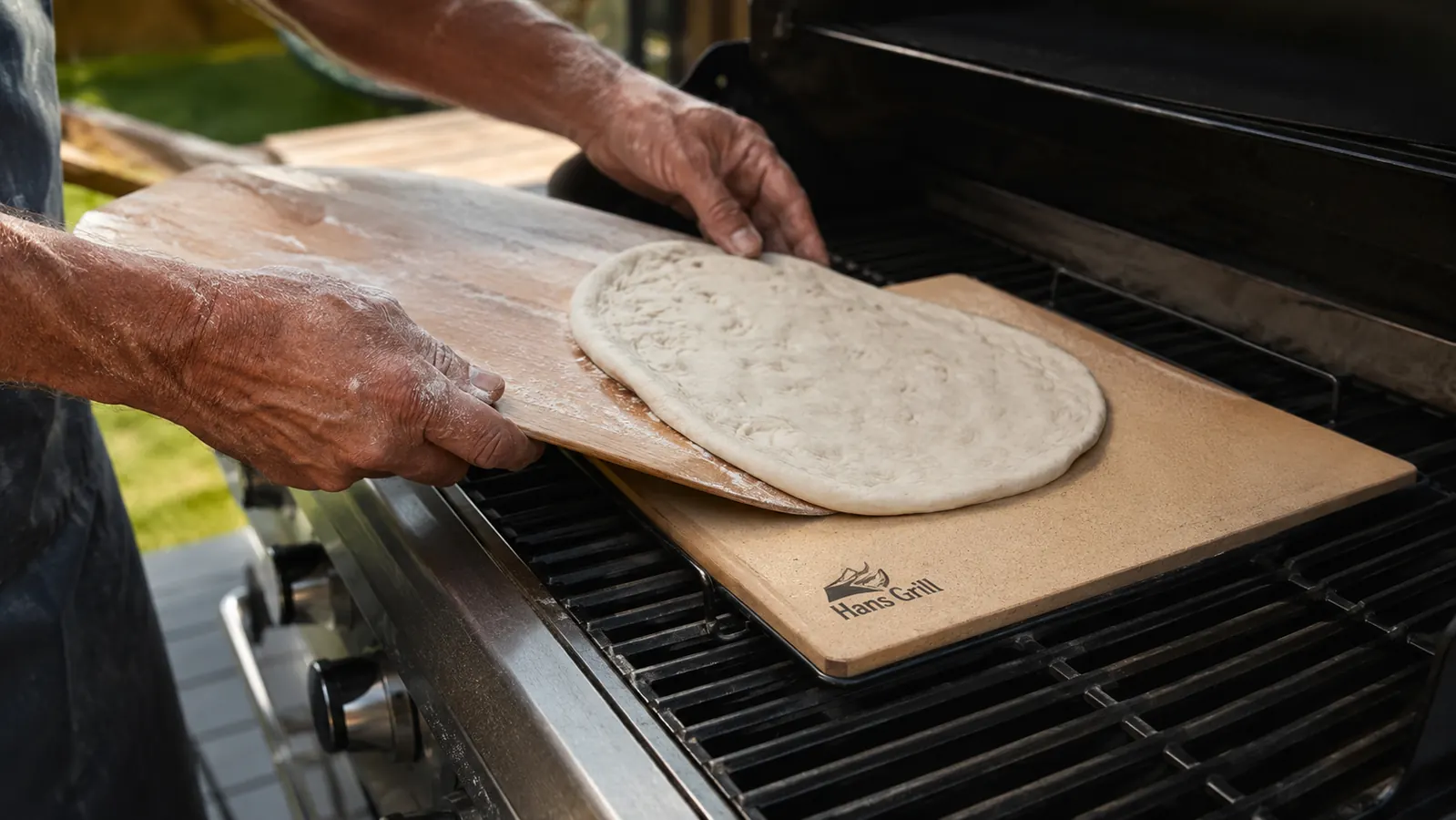
The Hans Grill stone lives on my gas grill's top rack most of the time, and it comes down to the main grate whenever it's pizza night. It's a big rectangular slab, thick enough that I need both hands and a folded towel to move it once it's hot, and it covers close to the full width of my 3-burner grate with room to spare on either side. I run the two outer burners on high and leave the middle one off, which puts the stone over indirect heat while still getting the lid temperature up over 500 degrees, close to what a real pizza oven runs at.
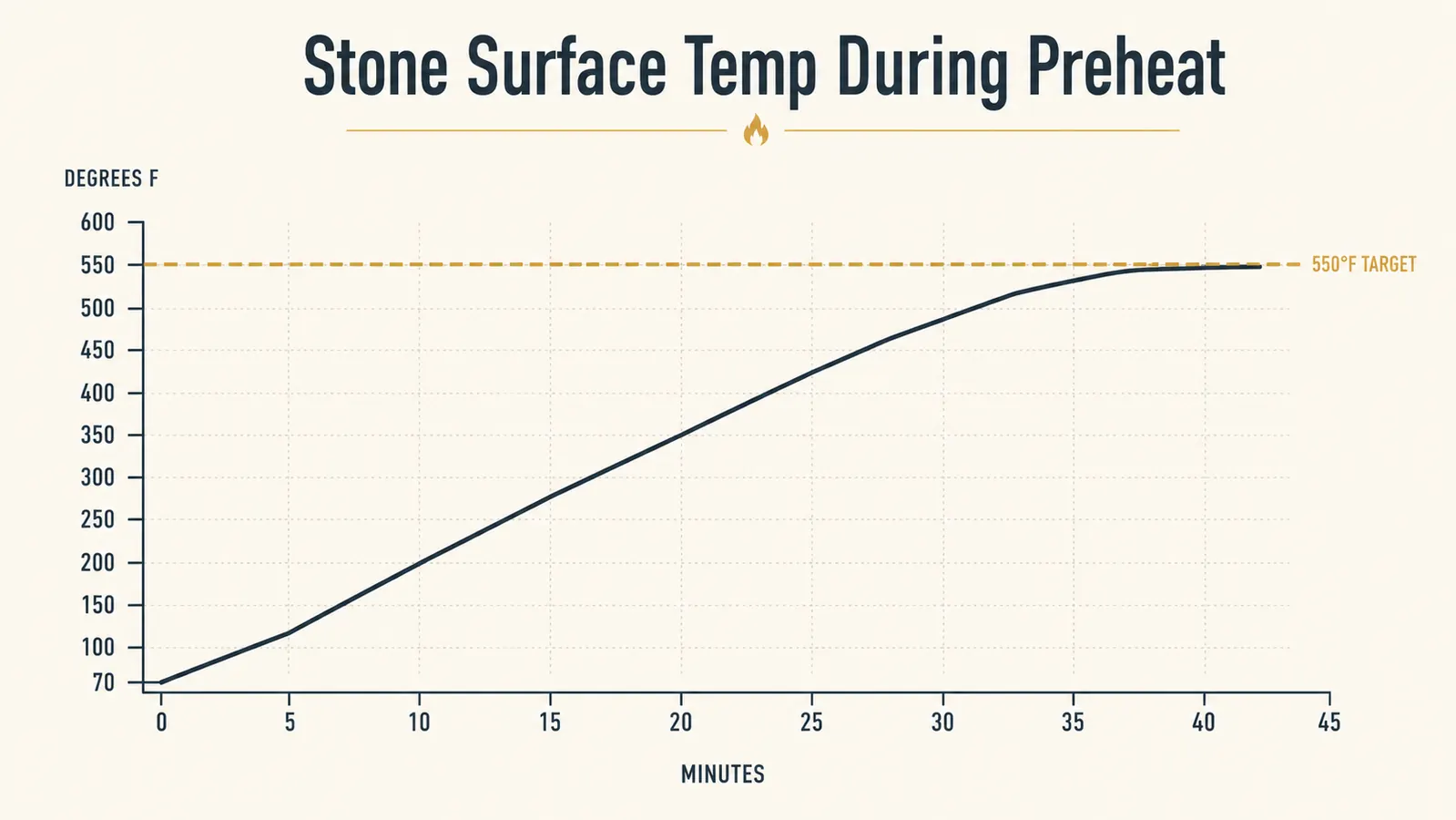
The first few pies were rough, and that was on me, not the stone. I didn't preheat long enough the first two times, maybe 15 minutes instead of the 40 I now know it actually needs, and both of those pizzas came out pale on the bottom with a crust that was more chewy than crisp. Once I started giving the stone a full 40 minutes to heat through before the first pie ever touched it, the difference was immediate. Bottom crust went from soft and floppy to genuinely crackly, with the kind of char spots you get at a real pizzeria.
By the second month I had a rhythm down: light the grill, let the stone preheat while I stretch dough and prep toppings, dust my peel with cornmeal so the raw pie slides instead of sticking, and cook each pizza in roughly 6 to 9 minutes depending on how loaded the toppings are. Travis borrowed the stone in the fall for his own cookout and called me afterward saying his crust came out better than mine had that same week, mostly because his grill runs a touch hotter than mine. I told him that's just physics and he should stop bragging about a borrowed stone.
Thermal Shock and Cracking: What a Year of Direct Grill Heat Really Does
Cracking is the thing everyone asks me about first, because cordierite stones have a reputation for shattering if you're careless with them, and I've read enough forum horror stories to understand why people are nervous. The material itself, and Hans Grill uses a genuinely thick slab of it, is built to handle extreme temperature swings better than the ceramic stones I used to see at the grocery store, and after a full year, mine has zero cracks, not even a hairline one, despite plenty of opportunities to ruin it.
The one rule I've never broken is never putting a cold stone straight into a hot grill or setting a hot stone down on a cold, wet surface. Thermal shock happens from a sudden temperature swing, not from high heat itself, so I always start the stone in the grill before I light the burners and let both come up to temperature together. I made the mistake once in September of setting the stone, straight off a 550-degree grill, onto a damp concrete step to cool for a second while I grabbed the peel. It hissed audibly and I about had a heart attack thinking I'd just cracked a stone I'd only owned two months. It survived, but I never repeat that mistake, and I keep a dry wooden trivet by the grill now specifically so I'm not tempted to set it on anything cold or wet again.
I've also run this stone through some genuinely rough conditions on purpose, partly out of curiosity and partly because Hank dared me to. A January cook with an outside air temp in the low 30s, where the stone had to climb from freezing to 550 degrees, produced no issues at all. The slower the ramp, the safer it is, and gas grills naturally heat gradually enough that this hasn't been a problem even in genuine cold.
The real risk I've seen with cordierite in general, not this stone specifically, is dropping cold liquid onto a hot surface, like a splash of sauce falling straight from the fridge onto a preheated stone. I've had a few small sauce drips land on mine over the year and none of them caused any visible damage, but I'm careful never to pour a cold liquid directly onto the surface in any real volume. That's less a flaw in the stone and more a rule I'd give anyone buying one, this one or any cordierite stone on the market.
Seasoning, Staining, and How the Stone Looks After a Year
This Hans Grill stone does not look like it did the day it arrived, and I don't think it's supposed to. It came out of the box a pale, almost sandy gray, and after a year of tomato sauce, olive oil, melted cheese, and the occasional burnt cornmeal edge, it's now a deep, mottled brown with darker rings where cheese has bubbled over and scorched into the surface. It looks a lot like a well-used cast iron skillet at this point, and honestly I've come to like the look of it. It reads as a stone that's actually been used, not one sitting in a box in the garage.
The staining doesn't affect performance as far as I can tell. Cordierite is porous by design, which is part of why it pulls moisture out of dough so effectively, and that same porosity is exactly why oil and sauce soak in and darken the surface permanently over time instead of wiping off. I asked Hank about this early on since his stone is two years older than mine, and his looks even darker than mine does now, with no drop-off in how his crusts turn out. If anything, he swears his seasoned stone performs a little better than it did new, the same way a cast iron pan improves with age.
The one thing I'll flag is that a lighter-colored stone straight out of the box will look genuinely alarming the first time a cheese overflow scorches a dark ring into it, especially if you're expecting it to wipe clean like a nonstick pan. It won't, and it's not supposed to. If a pristine, showroom-white stone matters to you for some reason, this isn't the product for that, but if you're using this thing for its actual job, cooking pizza, the staining is just evidence of a stone doing exactly what it's built to do.
Getting the Crust Right: Preheat Times and Grill Temperature Management
The single biggest lesson from this year is that patience during preheat matters more than anything else about technique. A full 40 minutes with the lid closed gets the stone surface itself up near 550 degrees, even though my grill's built-in thermometer reads the air temperature inside the lid rather than the stone's actual surface, and those two numbers are not the same thing. I finally bought a cheap infrared thermometer gun in the fall specifically to check the stone's surface directly, and it confirmed what I'd been guessing at for months, the stone runs noticeably cooler than the air around it until it's had real time to soak up heat.
Once the stone is properly preheated, cook time for a thin, home-stretched 12-inch pizza runs 6 to 9 minutes with the lid down, two-burner indirect setup, checking at the halfway mark by lifting the lid and rotating the pizza a quarter turn so the crust browns evenly instead of favoring whichever side sits closer to the lit burners. Skip the rotation and you'll get a crust that's noticeably darker on one side, something I learned after the first several attempts came out lopsided.
Thicker, more heavily topped pizzas need closer to 10 to 12 minutes and I've had to drop the burners slightly to medium-high partway through a couple of times when the top was browning faster than the bottom was cooking through. That balance between top char and bottom crispness is really the whole game with this stone, and it took me a solid two months of Friday nights before I stopped second-guessing myself on timing.
Cleanup: What Actually Comes Off the Stone (and What Doesn't)
You cannot wash this Hans Grill stone with soap and water, or at least you shouldn't, since cordierite's porous surface will soak up detergent and hold onto it, which is the last thing you want flavoring your next crust. My cleanup routine is simple: let the stone cool completely on the grill with the lid open, then scrape off any stuck cheese or burnt flour with a metal bench scraper or the flat edge of a pizza peel, then wipe with a dry cloth or a barely damp one if something's really stuck. That's it. No soap, ever.
Grease spots and sauce stains that don't scrape off just stay, and I've made peace with that, since as I mentioned it doesn't seem to hurt performance at all. What did surprise me is how little actually needs real effort. Most nights, a quick scrape and a wipe-down takes under two minutes, and cornmeal dusting from the peel is the main thing I'm ever cleaning off, not baked-on grime. The one time I let a cheese overflow sit for a couple of days before dealing with it, it took a little more scraping and some elbow grease with a stiff brush, so same-night cleanup is worth the extra few minutes.
What We Liked
- Zero cracks after a full year of weekly high-heat use across summer, fall, and a genuine January cold snap
- Thick cordierite construction holds heat evenly across a large surface for a crisp, char-spotted bottom crust
- Handles thermal ramps from freezing to 550 degrees without issue when preheated gradually alongside the grill
- Cleans up in under two minutes most nights with just a scraper and a dry cloth, no soap needed
- Large enough to cook a full 12-inch pizza with room to spare on the sides
- Ages and seasons like cast iron rather than degrading, according to both my own stone and Hank's two-year-old one
Where It Falls Short
- Full 40-minute preheat is non-negotiable for good results, which surprises people expecting a quick 15-minute warmup
- Permanent staining and dark scorch rings are cosmetic but will bother anyone who wants the stone to look new indefinitely
- Heavy and awkward to move once hot, two hands and a towel are a must
- No handles or built-in tray, so you're relying on a peel or towels for every transfer
It looks like a well-used cast iron pan at this point, dark, stained, a little rough around the edges, and that's exactly how I know it's doing its job.

Who This Is For
If you've got a gas grill or a charcoal kettle and you're tired of frozen pizzas or soggy centers from trying to cook dough straight on the grate, this stone solves that specific problem. It's also the right call if you're the type who doesn't mind a stone that looks used, since staining is part of the deal here, not a defect. Anyone willing to give it a real 40-minute preheat and handle it with a peel or towels, rather than expecting a lightweight, wipe-clean kitchen gadget, is going to get real mileage out of this thing week after week, the way I have every Friday for a year now.
Who Should Skip It
If you're only going to fire this up two or three times a year for a special occasion, the learning curve on preheat timing and heat management might not feel worth it compared to just buying a decent frozen pizza those few nights. And if the idea of a permanently stained, darkened stone bothers you, this isn't the product to fight that battle with, because cordierite is going to look used no matter how carefully you clean it. This is a tool for people who actually want a standing pizza night habit, not an occasional novelty for one cookout a summer.
A year of Friday pizza nights later, this stone is still my go-to.
If you're ready to trade frozen pizza for real grill-fired crust, this stone is the piece of equipment that actually makes the difference. Check the current listing for today's price and availability.
Amazon Check Today's Price on Amazon →