
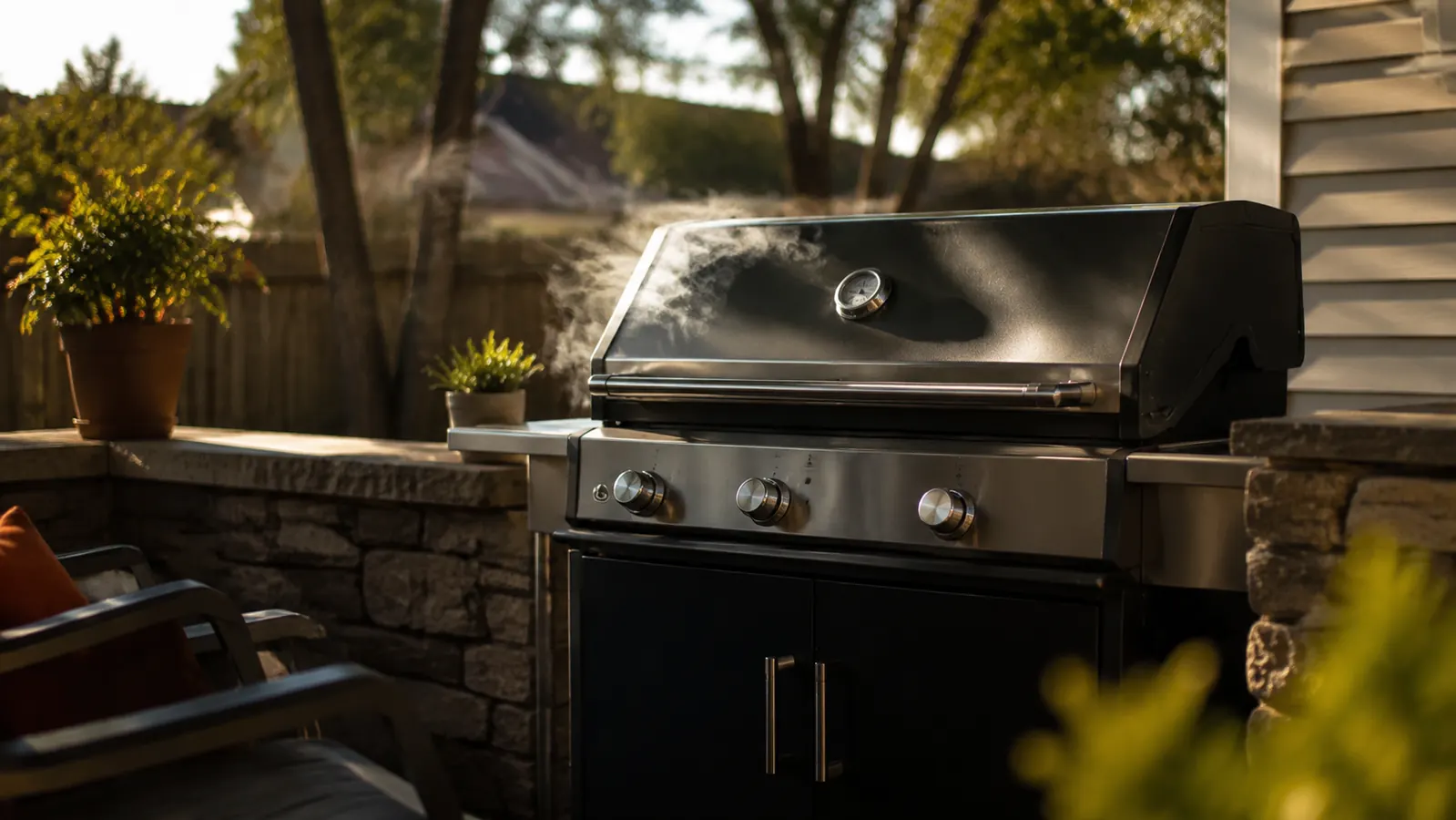
For years I stood at my three-burner gas grill on a Saturday afternoon, a foil packet of hickory chips smoking away under the grate, wondering why my ribs still tasted like nothing but propane and char. My buddy Hank, who's run an offset smoker for twenty years, kept telling me chips burn up too fast on a gas grill to do any real work. He was right. The fix that actually worked for me was switching to Weber Hickory Wood Chunks, the same ones I now keep in a five-gallon bucket in my garage year-round. Chunks burn slower, smolder longer, and actually survive long enough under a gas grill's lower heat to push real smoke into the meat instead of just perfuming the air around it. These days that bucket sits right next to my charcoal kettle, and between the two grills I probably go through six bags of chunks in a normal summer.
If you've ever pulled ribs off a gas grill and thought that's fine, but it's not smoky, you're not doing anything wrong exactly, you're just missing the one piece that makes propane taste like a stick-burner: wood chunks placed and prepped the right way. It took me two full grilling seasons of trial and error, a few conversations with Hank, and a lot of foil packets that turned to ash in fifteen minutes before I landed on a method that gets 45 minutes to an hour of steady smoke out of a gas grill. That's what I'm walking you through here, step by step, the same way I do it every time I fire up for Travis and the grandkids on a Sunday.
Get the Same Wood Chunks I Use Every Smoke Session
Weber Hickory Wood Chunks are what turned my gas grill from a cooking appliance into something that actually tastes like it spent time over wood. A 4 lb bag lasts me most of a season.
Amazon Check Today's Price on Amazon →Step 1: Choose the Right Chunk Size and Soak (or Don't)
The first mistake I made was treating chunks like chips, soaking them in a bucket of water for an hour the way my dad used to do with chips on his old kettle. Weber Hickory Wood Chunks are dense enough that soaking mostly just delays the smoke and can actually lower your grill's temperature when the wet wood hits the burner tubes. These days I run mine dry about eight times out of ten. I've also learned to break a chunk open before I buy a whole bag from anywhere else, since a dry, tightly grained piece of hickory smolders far more evenly than one with soft, punky wood at the center.
The exception is when I'm doing a long cook, a pork butt for Travis's birthday or a full brisket for Hank's retirement party, anything past two hours. For those I'll soak two or three chunks for 30 minutes just to slow the initial burn, then add the rest dry later in the cook. For a quicker cook like ribs or a rack of chicken thighs, skip the soak entirely and go straight to the grill.
Weber's chunks run bigger than most of the fist-sized pieces you'll find from other brands, which matters more than people think. A larger chunk means more solid wood buried inside, so it smolders slowly instead of catching fire outright, and it also means fewer trips to the garage to reload. I split the bigger ones in half with a hatchet when I want a faster, lighter smoke for something like chicken thighs, and I leave them whole for a heavier hit of hickory on a rack of ribs or a pork butt.
Step 2: Pick Your Placement, Foil Packet or Smoker Box
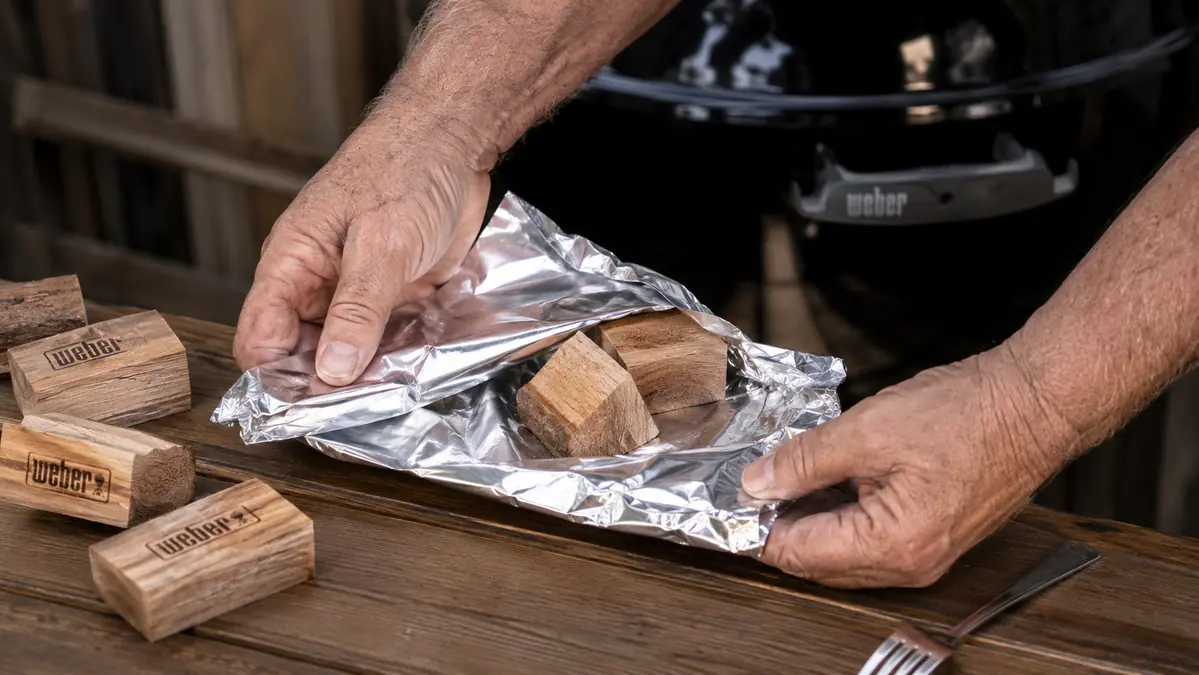
I've tried both methods on my 3-burner and they both work, but they solve slightly different problems. A foil packet is what I started with because I didn't want to buy another accessory. Take two or three chunks, wrap them tight in a double layer of heavy-duty foil, then poke five or six holes in the top with a fork so smoke can escape without the chunks catching real flame.
A smoker box, which is what I switched to after Bonnie got tired of finding burnt foil scraps stuck to the grates, holds up better over a longer cook and you can lift the lid to check on your chunks without unwrapping anything. Either way, the goal is the same: let the chunks smolder instead of igniting outright. If you see actual flames coming off the wood, you've got too much oxygen getting to it and you'll burn through your smoke supply in ten minutes flat.
Don't skip the holes in the foil packet, even if it feels like extra work when you're already juggling tongs and a drink in the other hand. Without airflow, the wood just steams inside the foil and you end up with a warm, damp packet that never really catches. Five or six holes poked with a fork, spaced out across the top, is enough to let smoke escape steadily without letting the whole thing flare up on you.
Step 3: Position It Over the Hottest Burner, Not the Coolest
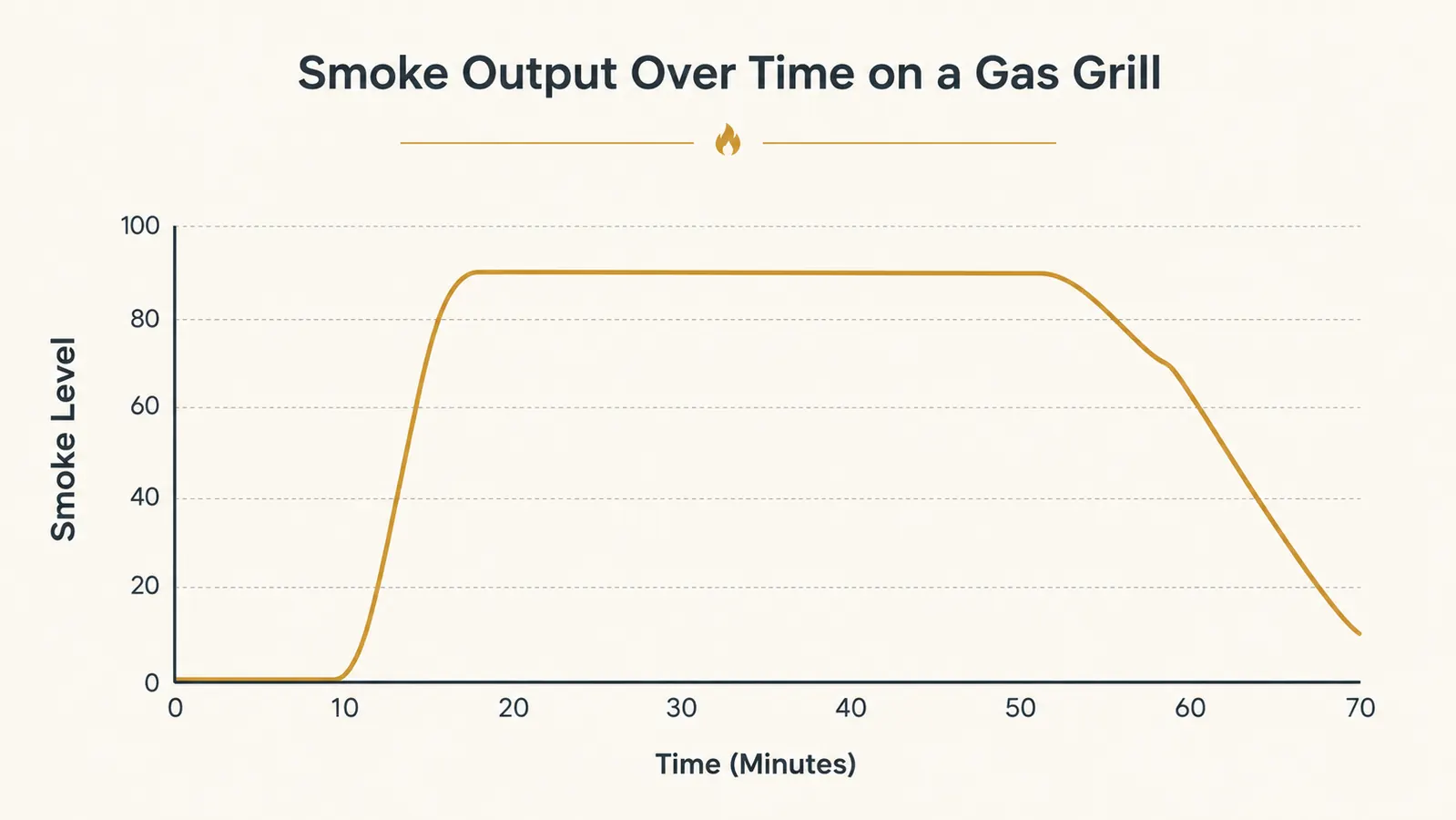
This is the step that took me the longest to figure out. I assumed you'd want to keep the wood chunks away from direct heat so they wouldn't burn up too fast. It's actually the opposite. You want your packet or smoker box sitting directly over one burner, usually the one you're going to run on high, so it gets hot enough to start smoldering the chunks within 10 to 15 minutes of turning the grill on.
I run my grill with only that one burner lit under the wood chunks, then set my meat on the opposite side of the grate over the burners that stay off. That's your indirect heat zone, and it's where the ribs, the chicken, whatever Bonnie's got planned for Sunday dinner, actually cooks. The lit burner stays low to medium, just enough to keep the chunks smoking without spiking the whole grill's temperature past 275 or so.
I made the mistake early on of splitting my wood chunks across two burners, thinking I'd get double the smoke. All that did was heat up both sides of the grill and shrink my indirect zone down to almost nothing, so the meat cooked too fast to pick up much flavor. One burner, one packet, is plenty. If you've got a bigger grill with four or five burners, the same rule applies. Just pick the one closest to where you want the smoke concentrated and keep everything else off or on low.
Step 4: Close the Lid and Leave It Alone
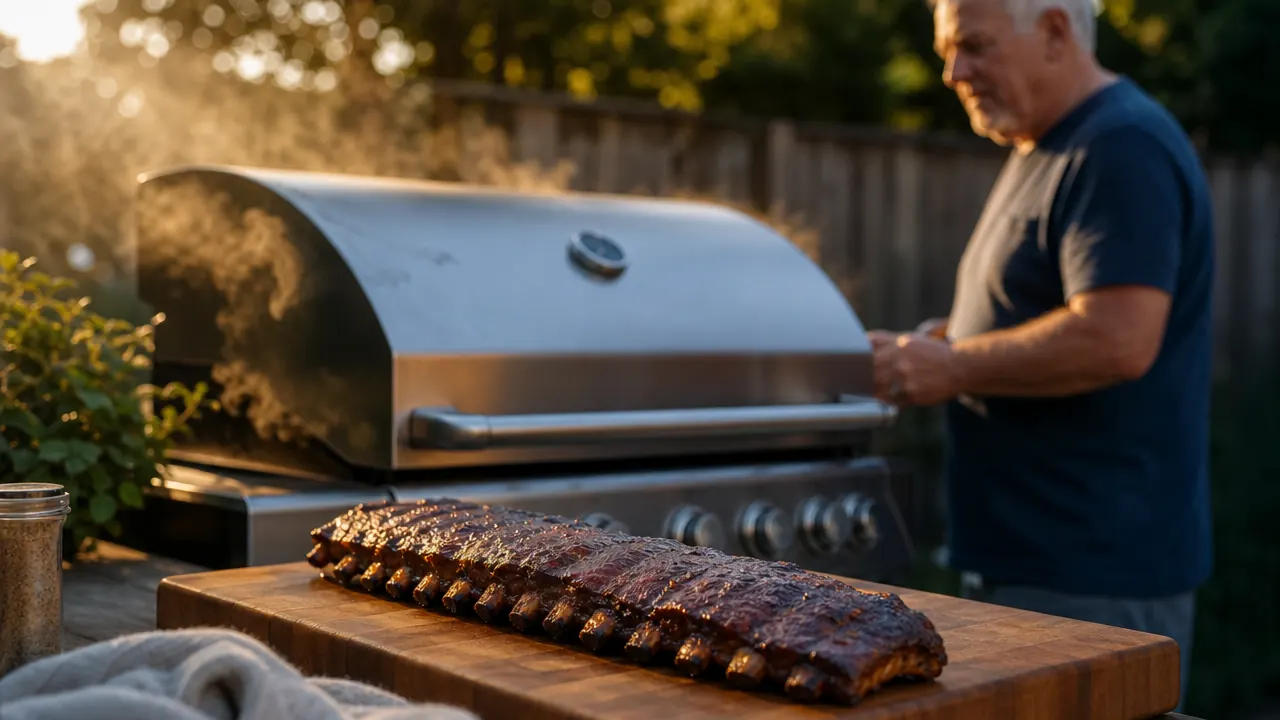
Every time I check on the grill in the first 20 minutes, I'm letting smoke escape that should be doing its job on the meat. I learned this the hard way during a Fourth of July cookout when Owen kept asking to lift the lid so he could see the smoke, and by the third peek I'd lost half my burn time. Now I tell the grandkids the smoke is shy and only comes out when nobody's watching.
Once you've got your grill set up with the wood chunks over the lit burner and the meat over indirect heat, close the lid and don't open it again for at least 20 to 25 minutes. Use that time to check your grill's built-in thermometer through the lid window if it has one, or just trust your burner setting. Weber Hickory Wood Chunks typically give me 45 minutes to an hour of visible smoke before they burn down to coals, which is plenty for most weeknight cooks.
Bonnie jokes that I check the grill more than I check my phone, but the wood chunks have actually cured me of that habit. Once I understood that every lid lift costs five to ten minutes of built-up smoke and heat, I started setting a timer instead of guessing. Twenty-five minutes for the first check. After that I'll peek every 15 to 20 minutes just to rotate the meat or baste, but never longer than a quick look before the lid goes back down.
Step 5: Reload for Longer Cooks
If you're doing something that runs past that hour mark, a pork shoulder or a whole brisket, you'll need to add fresh chunks partway through. I keep two or three extra chunks wrapped and ready on a plate next to the grill so I'm not fumbling with foil mid-cook. When the smoke thins out to almost nothing, usually around the hour mark, I lift the lid just enough to slide the spent packet out and the fresh one in, then close it right back up.
Most of what I cook, though, doesn't need a reload. A rack of ribs, a couple of chickens, even a pork tenderloin for a weeknight dinner all finish inside that first hour of smoke, which is honestly the appeal of doing this on a gas grill instead of firing up an offset. You get real wood flavor without babysitting a fire all afternoon.
On longer cooks I've also found it helps to stagger the chunks instead of loading three or four in at once. I'll add one chunk at the start, one more around the 30 minute mark, and a third around the hour mark instead of dumping the whole batch in right out of the gate. That keeps the smoke level steady from start to finish instead of hitting the meat hard early and then trailing off to nothing right when a long brisket cook actually needs it most.
What Else Helps
A few things make this whole process easier once you've got the basic method down. Keep your chunks dry in a sealed container in the garage, not out in the elements, since damp wood smolders unevenly and gives you inconsistent smoke from one cook to the next. I also keep a spray bottle of water nearby just in case a chunk does catch actual flame instead of smoldering, a quick spritz knocks it back down without dousing your whole fire. If you're new to this, start with just one or two chunks instead of loading up the whole smoker box. Too much smoke on your first few tries can turn meat bitter fast, and it's a lot easier to add more next time than to fix an oversmoked rack of ribs in front of company. I'd also keep a second bag of Weber Hickory Wood Chunks on hand once the weather warms up, because a busy grilling season goes through more wood than you'd expect, and running out mid-cook on a Saturday with the grandkids waiting is not a spot you want to be in. Last thing: scrape your grates clean before you start. Old grease and leftover char catch fire fast once that lit burner gets going, and a flare-up from dirty grates can wipe out a slow, steady smolder in about thirty seconds flat.
The chunks aren't the hard part. Leaving the lid alone is.
Stock Your Garage With the Wood Chunks That Actually Work on Gas
Once you've got the method down, the only thing left is having Weber Hickory Wood Chunks on hand before Saturday rolls around. I keep a bag ready year-round so I'm never scrambling.
Amazon Check Today's Price on Amazon →